Current Market Trends: Hype Fades, Discipline Pays
Updated 18 Mar, 2026
Introduction: The Market is a Paradox
The market isn’t logical. It’s psychological. It doesn’t reward intelligence—it rewards timing, nerve, and the ability to act while others unravel. The minute you think you’ve got it pinned, it mutates. Certainty is a luxury for the naive.
The quantum world provides the blueprint: nothing exists in a fixed state until observed. The market plays by the same rules. It floats between possibility and panic until someone pulls the trigger. When they do, price responds—not to truth, but to perception.
Master that, and you’re not playing the game. You’re setting the board.
Crashes Demand Clarity, Not Emotion
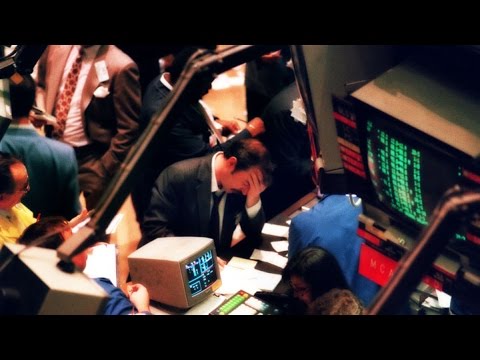
Fear is loud. Real danger whispers.
The crowd flinches at volatility while quietly chasing risk. The VIX flirts with mid-teen complacency, even as the undercurrent signals a sharp mean reversion. Sentiment is giddy disguised as caution. It is an almost-delusional state.
Correction incoming? Good. That’s your payday.
Covered calls let you siphon cash off stagnation without divorcing your winners. Cash-secured puts let you name your price. Get paid to wait, then own quality when blood hits the street.
You don’t run from fire. You wear a flame-resistant strategy and walk straight through.
The crowd reacts. The elite anticipates.
Markets Lie. Narratives Don’t.
Recession? Collapse? Cue the sirens. Look past the theatrics. This is theater wrapped in policy, staged by central banks and the corporate state.
The Fed isn’t trying to prevent a bust. It’s timing it. They won’t save the system. They will curate its destruction, selectively and surgically. Panic is a feature, not a flaw.
Reality is negotiated through consensus. If enough believe the lie, the lie becomes law.
Don’t chase fundamentals. Chase the belief structure behind them. That’s where the real moves originate.
We’ve Been Here Before — You Just Weren’t Looking
- 2004: The Religious Provocation Index flagged cultural instability before the West even blinked.
- 2015: The Adult Index tracked the rise of hyper-transactional ethics before “influencer morality” became currency.
- Now: The Psychological Fault Line is cracking. Investor sentiment is being rewritten, and most haven’t noticed.
The next correction won’t be a market event. It will be a psychological revelation. Those anchored to logic will drown. Those anchored to reflex will rise.
Volatility Unleashed: The Age of Market Whiplash
Volatility is not an anomaly. It is the heartbeat of the financial system. Our proprietary V-Indicator has shattered records, registering a seismic 16,900. Translation? The game is about to get wild.
- Elections will be a spectacle of chaos, introducing new levels of uncertainty.
- The era of “hot money” is just beginning. Negative rates will pour gasoline on an already raging inferno.
- The market will ascend to unprecedented heights, defying conventional logic and shaking even the most steadfast bulls.
But remember this: No bull runs forever. One day, this market will hit a wall. But today is not that day. Pullbacks are not to be feared; they are invitations.
The strategy remains clear:
- Take profits when euphoria peaks.
- Use covered calls to extract value from sideways action.
- Deploy capital on significant dips through covered puts on high-quality stocks.
Dancing with Wolves: The Market’s Quantum Masquerade
The prophets of doom are out in force. They warn of collapse as if the end is preordained. Yet, while they howl at the moon, the market stands unmoved. It is infinitely more complex than their linear narratives allow.
This is not a chessboard. It is a quantum masquerade, where every move is both a threat and an opportunity, and every correction is a feint rather than a fatal blow.
The market’s true nature is paradox. Panic and euphoria are not opposites but partners in a dance, swirling in superposition until the collective gaze of the crowd collapses the wave. The doomsayers crave a singular outcome. The market refuses to be pinned down. Yes, a reckoning will come eventually. But today, the market is a stage for those who understand that chaos is not the enemy. It is the raw material of fortune.
The Fed: Puppetmaster in Silk Gloves
While the masses fixate on headlines, the Federal Reserve moves with the subtlety of a master illusionist. Its power lies not in brute force, but in the artful manipulation of perception and liquidity. The Fed is the invisible hand that steadies the table when the dice are rolling wild, ensuring that collapse remains a distant specter.
This is Machiavelli’s lesson in modern dress: true power operates quietly, with finesse, not bluster. The Fed’s interventions rarely aim to save the market. They aim to preserve the illusion of control. As long as the crowd believes, the game continues. The real crash only arrives when faith is lost, not when fear is loudest.
Mass Psychology: The Market’s Secret Engine
Here’s the truth the lambs never see: markets don’t crash when fear peaks. They crash when fear is forgotten. They crash when the herd is drunk on certainty and blind to risk.
Our proprietary Anxiety Index, a barometer of collective dread, still pulses with caution. As long as the crowd is anxious, the bull market’s heart keeps beating.
This is the fox’s edge. The wall of worry is not an obstacle; it is the very fuel that propels prices higher. When the masses are paralyzed by doubt, the market is safest. When they turn euphoric, it’s time to sharpen your claws.
Wealth Creation: The Art of the Unseen
If the market were a simple machine, wealth would be a commodity. But the market is a living organism, governed by invisible forces—sentiment, liquidity, manipulation—that defy easy analysis.
Over 90% of participants are lambs. Herded by emotion and cognitive bias, they are destined to be fleeced. The foxes move in silence, exploiting the unseen connections that bind the system together.
Wealth is not created by following the crowd. It is created by anticipating its next move. You must see the entanglement between policy and psychology, between what is said and what is done. The fox knows that every panic is a buying opportunity. Every correction is a chance to accumulate assets at prices the lambs will envy when the dust settles.
The Doctrine of Inflate or Die
The Federal Reserve’s true creed is simple: inflate or die. The system relies on perpetual expansion, a cycle that ends only when the masses revolt or the illusion shatters.
The irony is rich. Over half the population sits on the sidelines, lamenting their lack of resources, even as they squander wealth on fleeting indulgences. They curse the game but refuse to learn its rules.
The choice is binary. Rail against the Fed’s manipulations and remain powerless, or embrace the trend and use every correction as a springboard to greater wealth. Complaints are the currency of the poor. Action is the language of the rich.
The Fox’s Playbook: Ruthless Beneath the Wool
True financial mastery does not stem from slavish devotion to technical analysis or the endless parsing of corporate reports. It stems from the ability to read the crowd. You must sense the shift in mood before it becomes news, and act with quiet ruthlessness while maintaining the appearance of innocence.
The market rewards those who can wear the lamb’s fleece while thinking like a fox. Move with the crowd when it suits you, and against it when the time is right. The next correction will not be the end; it will be an invitation. The only question is: will you be the hunter, or the hunted?
Conclusion: Upstream Thinking—Rewiring the Investor’s Mind
Most market commentary is trapped inside an echo chamber. It recycles stale premises about rates, cycles, and sentiment as if these are immutable laws rather than cultural superstitions. The real question isn’t whether the market will rise or fall. The real question is whether the assumptions driving the debate are true at all.
Let’s turn Bayesian thinking on its head. Don’t just update probabilities—interrogate the priors themselves. Why do we treat “mean reversion” or “Fed omnipotence” as gospel? Why does the crowd fixate on patterns in backward-looking data, expecting the future to rhyme?
Most investors unconsciously anchor to stories that comfort the herd but crucify the outlier. They believe that cycles are clockwork, that fear is always contrarian, and that liquidity is infinite until it isn’t. What if these are brittle myths rather than foundational truths?
The fatal error is mistaking consensus for certainty. The market’s most dangerous virus is the unexamined mental model—the invisible scripts that dictate action and guarantee mediocrity. Programmed by conventional finance, the masses react to volatility as a threat, not a gift. They see the Fed as a parental figure, not a political actor. They believe risk is managed by formulas, not by adaptive thinking.
To transcend, you must go upstream. Deconstruct the mental scaffolding that supports crowd behavior. Ask:
- Is this panic genuinely irrational, or is it rational given flawed priors?
- Do repeated cycles actually exist, or are we just pattern-matching noise?
- Is sentiment a lagging indicator, or the primary driver?
Here is the contrarian edge: recognize that volatility is the signal, not the enemy. Recognize that cycles are social constructs, not physical laws. The crowd’s fear is not always bullish, and their confidence is not always the bell at the top. The fox questions every assumption the lambs swallow whole.
The sharpest weapon is not technical brilliance or market lore. It is ruthless self-interrogation. True mastery requires the ability to unlearn, to discard broken models, and to stand upstream, watching the river of mass psychology flow by. Wade in when necessary, but never get swept away.
In the end, the market is a mirror. It reflects not just numbers, but the hopes, fears, and ambitions of millions. To thrive, you must master the art of perception and the science of action. Speak softly, move decisively, and remember: in a world of lambs, the fox eats well.

Intellectual Odyssey: Unveiling Rich Stories